
The Sonoran Desert Toad and 5-MeO-DMT: What The Ego Trip Reveals About the Psychedelic Boom



Interest in psychedelics is growing rapidly, but the story of the Sonoran Desert toad shows why enthusiasm must be balanced with science, safety, conservation and accountability.
A newly published excerpt from journalist Kimon de Greef’s book, The Ego Trip: Psychedelic Toads, a Trail of Deaths, and the Guru Who Peddled Transcendence, explores how a little-known substance found in the defensive secretion of a desert amphibian became part of the international psychedelic movement.
As reported by UA.NEWS, the book follows the spread of 5-MeO-DMT practices across Mexico and the United States—and examines what can happen when powerful psychedelic experiences collide with commercialization, unqualified facilitators and spiritual promises that outrun the available evidence.
What Is the Sonoran Desert Toad?
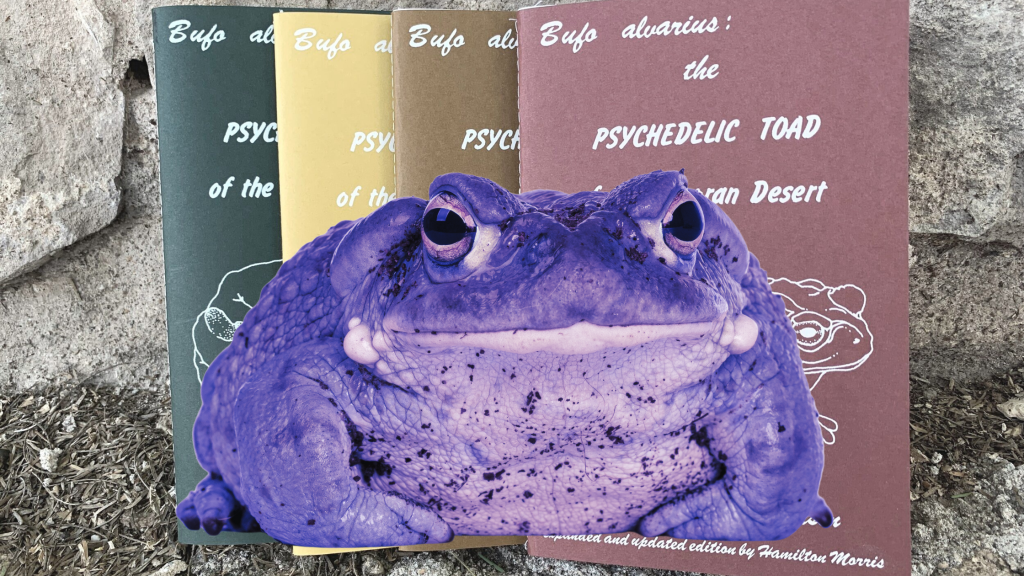
The Sonoran Desert toad, scientifically known as Incilius alvarius and also called the Colorado River toad, is native to parts of northern Mexico and the southwestern United States.
It is one of North America’s largest native toads, with adults growing to nearly eight inches long. Large glands around its head and legs release a defensive secretion containing several compounds, including 5-methoxy-N,N-dimethyltryptamine, commonly abbreviated as 5-MeO-DMT.
The secretion is part of the animal’s natural defense system. It is not something the toad produces for human consumption, and swallowing the raw secretion can be dangerous.
These toads spend much of the year underground to escape extreme desert heat and drought. They typically emerge following seasonal rains to feed and reproduce in temporary pools of water. That short window of activity makes the species especially vulnerable to habitat destruction, road traffic and human collection.
What Is 5-MeO-DMT?
5-MeO-DMT is a powerful, short-acting psychedelic compound. Although its name resembles DMT, or N,N-DMT, the two are chemically and experientially different substances.
5-MeO-DMT is also not psilocybin, and it should not be confused with the compounds found in psychedelic mushrooms.
Reported effects may begin within seconds when the substance is administered through certain routes and may include:
- A dramatic alteration of consciousness
- Loss of ordinary time perception
- A temporary dissolution of personal identity
- Mystical or nondual experiences
- Sensations of unity, emptiness or bright white light
- Fear, panic, confusion or psychological overwhelm
The strongest effects are often relatively brief compared with those of psilocybin or LSD. However, “short” does not mean mild or safe. An experience lasting minutes can still be physically and psychologically intense.
How “Toad Medicine” Entered the Psychedelic Mainstream
De Greef’s book examines how 5-MeO-DMT moved from an obscure practice into psychedelic tourism, wellness culture and celebrity conversation.
The compound has sometimes been marketed as “toad medicine” or promoted as an ancient Indigenous sacrament. That history deserves careful scrutiny. Modern use of dried Sonoran Desert toad secretion appears to have become publicly documented during the late 20th century, and sweeping claims about an unbroken ancient tradition remain controversial.
This distinction matters because a powerful story can become a marketing tool. Calling something “ancient,” “sacred” or “natural” may give it an appearance of safety and legitimacy that has not been established through research.
The Ego Trip reportedly explores this darker side of the psychedelic renaissance through the story of a charismatic promoter whose practices were linked to allegations of abuse, reckless administration and deaths. The book’s broader message is difficult to ignore: a dramatic personal transformation does not automatically qualify someone to treat other people.
Does 5-MeO-DMT Have Therapeutic Potential?
Researchers are investigating synthetic, pharmaceutical-grade 5-MeO-DMT for possible mental-health applications, including treatment-resistant depression. That work is still in an early stage.
A 2024 systematic review identified only three eligible clinical trials involving a combined 78 participants. Researchers reported encouraging short-term tolerability under controlled conditions, but emphasized that the evidence remains limited and that larger, randomized studies with longer follow-up are needed. Read the review through the National Library of Medicine.
Another early clinical trial reported no serious adverse events, although participants experienced effects including nausea, vomiting, headaches and nasal discomfort. These results apply to screened participants receiving measured formulations under research protocols. They do not establish that unsupervised or underground use is safe. View the study on PubMed.
That difference is essential.
A clinical trial may include medical screening, standardized dosing, trained personnel, emergency procedures and follow-up care. A ceremony advertised online may offer none of those protections.
Promising research is not the same thing as an approved treatment.
Is 5-MeO-DMT Legal in the United States?
Under current federal law, 5-MeO-DMT is listed as a Schedule I controlled substance in the United States. Unauthorized possession, manufacture or distribution can carry serious legal consequences. Its federal classification is listed in Title 21, Section 1308.11 of the Code of Federal Regulations.
Laws can also vary across states, local jurisdictions and countries. The existence of a retreat, ceremony or online advertisement does not prove that an activity is legal.
Anyone seeking treatment for a medical or mental-health condition should consult a qualified healthcare professional and should not interpret emerging psychedelic research as instructions for self-treatment.
Why Collecting Toad Secretion Raises Ethical Concerns
Even when conversations focus on human experiences, the toad itself cannot be treated as a psychedelic vending machine.
Repeated handling and gland expression can place stress on wild animals. Collection may also disturb breeding activity during the limited rainy-season period when the toads are above ground. Meanwhile, expanding cities, agriculture, highways, border infrastructure and shrinking water sources continue to alter desert habitats.
The growing demand for “natural” psychedelic products therefore creates an ethical problem: human interest in transformation can become another form of wildlife exploitation.
Researchers do not need to harvest wild toads to study 5-MeO-DMT. The compound can be synthesized for carefully regulated scientific research, eliminating the supposed need to collect defensive secretion from an animal.
Protecting wildlife should be part of psychedelic ethics—not an afterthought.
Natural Does Not Automatically Mean Safe
“Natural” is one of the most persuasive words in wellness marketing. It is also one of the most misleading when used as a substitute for evidence.
Nature produces beautiful flowers, nutritious mushrooms and lifesaving compounds. It also produces poisonous plants, toxic secretions and organisms capable of causing serious harm.
The relevant questions are not simply whether a substance comes from nature. We should ask:
- Has it been accurately identified?
- Has its composition been tested?
- What does credible research actually show?
- What are the medical and psychological risks?
- Is its possession or use legal?
- Is its production ethical and environmentally responsible?
- Are health claims supported by evidence?
A powerful experience can feel meaningful without proving that every explanation offered about it is true.
Psychedelic Education Must Include the Uncomfortable Parts
The renewed interest in psychedelics has created space for important scientific research and more honest conversations about consciousness and mental health. It has also attracted opportunists eager to sell certainty, healing and enlightenment.
Education cannot focus only on extraordinary experiences. It must also address:
- Informed consent
- Medical and psychiatric screening
- Facilitator qualifications
- Abuse and power imbalances
- Unsupported health claims
- Wildlife conservation
- Cultural appropriation
- Legal consequences
- The difference between research and marketing
The story surrounding 5-MeO-DMT and the Sonoran Desert toad is not simply about an unusual psychedelic. It is a warning about what happens when mystery becomes a product and personal charisma replaces accountability.
The Future of 5-MeO-DMT Research
5-MeO-DMT may eventually contribute to new treatments, but that possibility must be evaluated through rigorous science—not guaranteed by testimonials, celebrity endorsements or spiritual branding.
Future research will need to determine appropriate clinical protocols, identify risks, examine drug interactions, track long-term outcomes and establish which patients, if any, could benefit. Researchers must also separate pharmaceutical investigation from practices that exploit wild animals or expose people to uncontrolled conditions.
The psychedelic renaissance will be judged not only by the experiences it produces, but by how responsibly it protects patients, participants, communities and the natural world.
At Learn Euphoria, we believe legalization and meaningful reform begin with accurate education. Curiosity is valuable—but curiosity works best when it travels alongside evidence, ethics and humility.
Frequently Asked Questions
Is 5-MeO-DMT the same as DMT?
No. 5-MeO-DMT and N,N-DMT are distinct chemical compounds with different effects. Similar names do not make them interchangeable.
Is 5-MeO-DMT the same as psilocybin?
No. Psilocybin is best known as a naturally occurring compound in certain mushroom species. 5-MeO-DMT is a different molecule.
Does the Sonoran Desert toad produce 5-MeO-DMT?
Its defensive gland secretion contains 5-MeO-DMT along with other compounds. That does not mean the raw secretion is safe for human use.
Is 5-MeO-DMT legal?
It is a Schedule I controlled substance under United States federal law. Other laws may apply depending on the location.
Is 5-MeO-DMT an approved treatment for depression?
No. Research is underway, but 5-MeO-DMT has not been approved by the FDA as a treatment for depression or another medical condition.
Must researchers obtain 5-MeO-DMT from toads?
No. 5-MeO-DMT can be produced synthetically for authorized research without collecting secretions from wild animals.


You must be logged in to post a comment.