
VA and Compass Pathways Launch Psilocybin Study for Veterans With Treatment-Resistant Depression


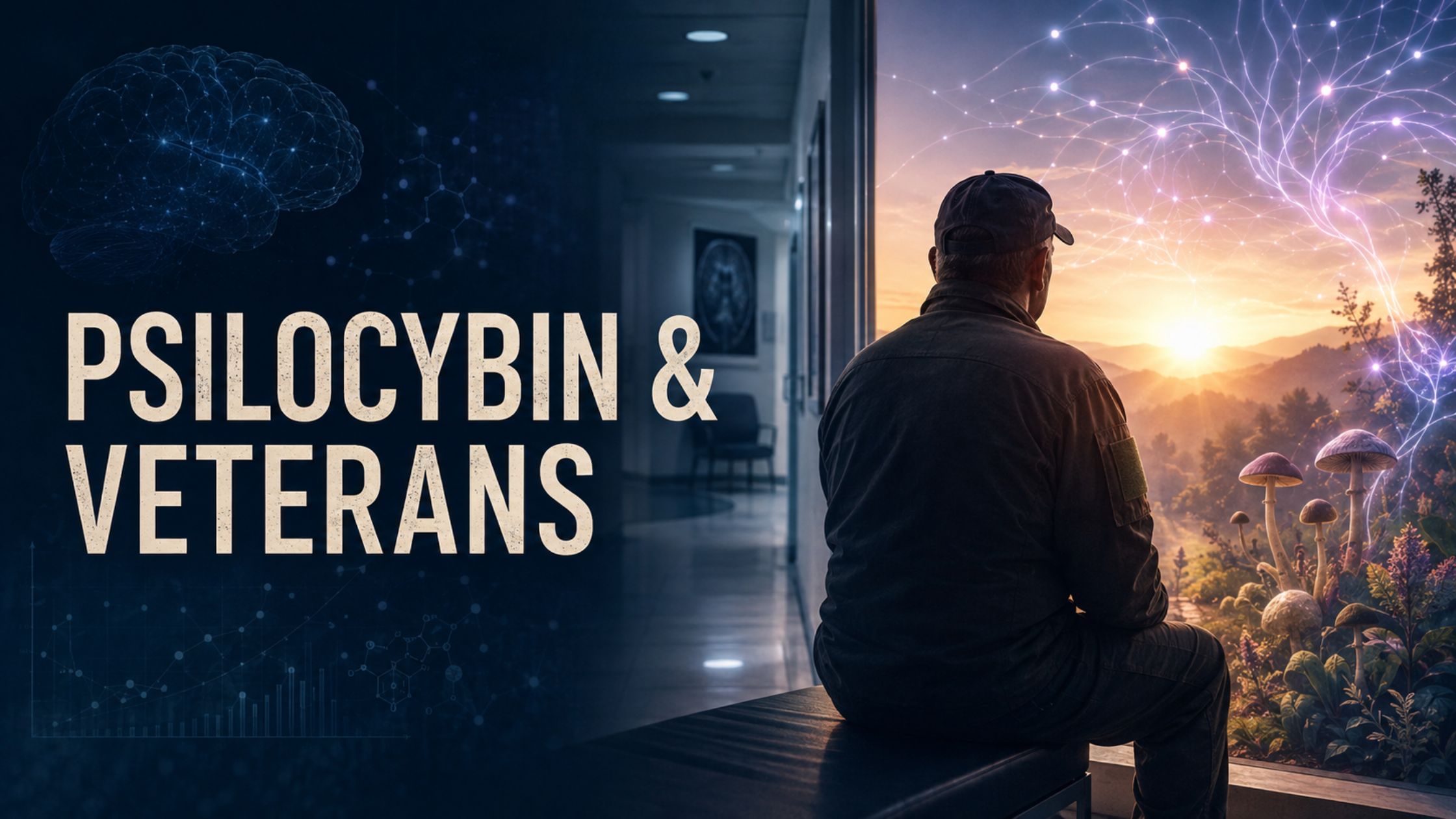
The U.S. Department of Veterans Affairs is moving psychedelic research deeper into mainstream medicine.
On August 6, 2026, Compass Pathways announced that it is working with the VA on PIVOT—“Psilocybin Intervention for Veterans Overcoming Treatment-Resistant Depression.” This multi-site clinical trial will investigate whether COMP360 psilocybin may safely reduce depression symptoms in veterans who have not responded adequately to conventional treatments.
The study will also include veterans living with both treatment-resistant depression and post-traumatic stress disorder, allowing researchers to explore one of the most difficult and consequential challenges in veteran mental health care.
This is not the legalization of psilocybin, an FDA approval, or a decision to make psychedelic therapy routinely available through VA hospitals. It is a controlled scientific investigation designed to determine whether this treatment approach is safe and effective.
Still, the significance is difficult to ignore: the country’s largest integrated healthcare system is directly supporting a randomized clinical trial of psilocybin for veterans.
What Is the VA’s PIVOT Psilocybin Study?
PIVOT is a multi-site, double-blind, randomized controlled clinical trial sponsored by the Department of Veterans Affairs.
According to the Compass Pathways announcement, researchers will evaluate two different doses of COMP360 psilocybin in veterans diagnosed with treatment-resistant depression. Participants may have depression alone or depression occurring alongside PTSD.
An optional second open-label administration will be available four weeks after the initial dose. “Open-label” means participants and researchers will know which treatment is being administered during that portion of the study.
The research will be conducted at five VA healthcare locations:
- Birmingham, Alabama
- Tuscaloosa, Alabama
- Portland, Oregon
- Seattle, Washington
- Philadelphia, Pennsylvania
The Birmingham VA Health Care System will serve as the lead site.
The study is registered through ClinicalTrials.gov as NCT07226232.
What Is COMP360 Psilocybin?
COMP360 is Compass Pathways’ proprietary pharmaceutical-grade formulation of synthetic psilocybin. It is manufactured for stability, consistency and purity in controlled clinical research.
Compass will donate the investigational drug for the PIVOT study. The company will also provide researchers with training materials, guidance and consultation concerning administration protocols. VA investigators will train the initial healthcare providers involved in the study and help prepare additional support personnel as needed.
The word “synthetic” in this context does not necessarily mean that COMP360 produces effects completely different from mushroom-derived psilocybin. It means the compound is manufactured under controlled pharmaceutical conditions instead of being extracted from mushrooms.
That standardization matters in clinical research because scientists must know exactly what dose each participant receives.
COMP360 remains investigational. It has not been approved by the FDA as a treatment for depression, PTSD or any other condition.
What Will Researchers Measure?
The study’s primary outcome will be the severity of participants’ depression symptoms, measured using the Montgomery–Åsberg Depression Rating Scale, commonly known as MADRS.
MADRS is a clinical assessment used by researchers and mental health professionals to measure changes in depression severity.
Secondary outcomes will include:
- Changes in PTSD symptoms
- Patient-reported depression symptoms
- Side effects and tolerability
- The safety of the two investigated doses
- The possible effects of an optional second administration
The use of a randomized, double-blind design is particularly important. Psychedelic studies can be difficult to blind because participants may recognize noticeable psychoactive effects. Even so, controlled comparison groups help researchers separate genuine treatment effects from expectations, environmental influences and placebo responses.
Why Focus on Treatment-Resistant Depression in Veterans?
Treatment-resistant depression generally describes major depression that has not improved adequately after at least two appropriate courses of approved antidepressant treatment.
For veterans, depression may occur alongside PTSD, chronic pain, sleep disorders, substance-use disorders or difficulties adjusting to civilian life. These overlapping challenges can make treatment more complicated.
Compass reports that approximately one in seven veterans with depression may experience treatment-resistant depression. Veterans living with both depression and PTSD may also face a substantially greater risk of suicidal behavior than veterans experiencing PTSD alone.
Existing therapies help many people, but they do not work equally well for everyone. That is why carefully conducted research into new treatment options matters.
The purpose of psychedelic research should not be to replace every antidepressant or form of psychotherapy. It should be to determine whether another evidence-based option can be developed for patients who have exhausted existing choices.
Why Is This Psilocybin Study Significant?
The involvement of the VA gives the study importance beyond Compass Pathways or the psychedelic industry.
The VA operates one of the largest healthcare systems in the United States and serves a population with substantial mental health needs. Its participation demonstrates that psilocybin research is increasingly being evaluated through conventional medical institutions and established clinical standards.
The study may also help researchers answer questions that remain underexplored. Much of the existing psilocybin research has examined depression or PTSD separately. PIVOT will include veterans who experience treatment-resistant depression with or without concurrent PTSD.
That could help scientists better understand how psilocybin affects patients with multiple, overlapping diagnoses—the kind of complexity commonly encountered in real-world mental health care.
However, institutional participation is not proof that a therapy works. It means the question has become important enough to investigate rigorously.
Does This Mean Veterans Can Receive Psilocybin Therapy Through the VA?
No. PIVOT is an investigational clinical trial, not a new standard VA treatment program.
Psilocybin remains a Schedule I controlled substance under federal law. COMP360 may only be administered within legally authorized research and development settings.
Veterans should not interpret this announcement as permission to obtain psilocybin independently, bring it into a VA facility or replace prescribed medication with an unapproved psychedelic product.
Clinical psychedelic research typically involves medical screening, preparation, controlled administration, trained supervision and follow-up. Those safeguards are a central part of the research—not optional additions.
Anyone interested in participating should consult the official ClinicalTrials.gov listing and communicate directly with authorized study personnel. Never stop taking a psychiatric medication without speaking to the prescribing healthcare professional.
What Could the PIVOT Trial Teach Us?
If the study produces positive results, it could provide evidence supporting larger trials, future regulatory submissions or additional research into psilocybin-assisted treatment for veterans.
Researchers may gain a clearer understanding of:
- Whether COMP360 can reduce severe depression symptoms
- How veterans with concurrent PTSD respond
- Which side effects occur and how frequently
- Whether a second administration offers additional benefit
- How psychedelic treatment protocols could function within a large healthcare system
- What training and infrastructure clinicians would need if a therapy were eventually approved
Negative or mixed results would also be scientifically valuable. They could reveal limitations, identify safety concerns or help researchers improve future study designs.
Science advances by testing possibilities—not by assuming that promising treatments will succeed.
From Psychedelic Hype to Psychedelic Healthcare
Psychedelics are often discussed as either miracle cures or dangerous drugs. Neither extreme adequately reflects the state of the evidence.
Psilocybin has produced encouraging results in several areas of mental health research, but promising early findings do not automatically translate into safe, effective and widely accessible treatments.
Turning psychedelic potential into healthcare requires:
- Well-designed controlled trials
- Honest reporting of positive and negative results
- Consistent pharmaceutical manufacturing
- Careful participant screening
- Trained clinical support
- Long-term safety monitoring
- Ethical standards that protect vulnerable patients
- Regulatory review based on evidence
The PIVOT study represents another step in that process. It brings psychedelic research into direct collaboration with the VA while keeping the focus on veterans who have not found adequate relief through existing treatments.
What This Means for the Future of Psychedelic Medicine
The announcement does not settle the debate surrounding psilocybin. It does show that the debate is changing.
The central question is increasingly becoming less about whether psychedelic research should exist and more about what the evidence actually demonstrates, which patients may benefit and how treatment could be delivered responsibly.
For veterans with treatment-resistant depression, that shift matters. Hope is valuable, but evidence is what can eventually turn hope into legitimate healthcare.
At Learn Euphoria, our mission is “Legalization through Education.” We believe progress in psychedelic medicine depends on replacing misinformation and exaggerated promises with science, safety and honest public education.
The VA’s PIVOT trial deserves attention not because it guarantees that psilocybin will become an approved treatment, but because it may help produce the evidence needed to find out.
Frequently Asked Questions
Is the VA studying psilocybin for veterans?
Yes. The Department of Veterans Affairs is sponsoring the PIVOT clinical trial, which will investigate COMP360 psilocybin in veterans with treatment-resistant depression, including some who also have PTSD.
Is psilocybin now available through VA hospitals?
No. Psilocybin is being studied in a controlled clinical trial. It has not been approved as a standard VA treatment.
What is treatment-resistant depression?
Treatment-resistant depression generally refers to depression that has not improved adequately after at least two appropriate antidepressant treatment attempts.
Is COMP360 made from psychedelic mushrooms?
COMP360 is a synthetic, proprietary, pharmaceutical-grade formulation of psilocybin developed by Compass Pathways for controlled clinical research.
Does COMP360 have FDA approval?
No. COMP360 is investigational and has not been approved by the FDA for depression, PTSD or another medical condition.
Where will the PIVOT study take place?
The five participating VA locations are Birmingham, Tuscaloosa, Portland, Seattle and Philadelphia, with Birmingham serving as the lead site.
Educational disclaimer: This article is provided for general educational purposes and is not medical or legal advice. Psilocybin remains federally controlled and COMP360 remains investigational. People experiencing a mental health crisis in the United States can call or text 988. Veterans can call 988 and press 1 to reach the Veterans Crisis Line.


You must be logged in to post a comment.